TL;DR: The Long Island Iced Tea is a high-ABV, tea-free cocktail that blends equal parts vodka, tequila, white rum, gin, and triple sec with fresh lemon juice, simple syrup, and a splash of cola. This five-liquor mix delivers a surprisingly balanced, citrusy, and sweet flavor profile that famously mimics the taste and appearance of traditional iced tea.
Despite the name, there is absolutely no tea in a Long Island Iced Tea. This famous highball cocktail relies on a clever illusion, using a precise mixture of clear spirits, citrus, and a splash of cola to mimic the amber hue and refreshing taste of classic iced tea.
Many amateur mixologists assume that combining five different liquors will result in a harsh, unpalatable drink. However, when prepared with the correct ratios and fresh ingredients, the Long Island Iced Tea (LIIT) transforms into a remarkably smooth and balanced beverage. The key lies in precise measurement and avoiding the overly sweet, artificial sour mixes that ruin many bar versions.
This comprehensive guide breaks down the official International Bartenders Association (IBA) standard recipe. By reading this guide, cocktail enthusiasts will learn exactly how to balance the complex flavor profile, discover the fascinating history behind the drink, and master professional preparation techniques to elevate their home bartending skills.
Where did the Long Island Iced Tea originate?
The origins of the Long Island Iced Tea are split between two distinct legends, both claiming the invention of this infamous drink.
The first story traces back to the 1920s Prohibition era in Kingsport, Tennessee. A moonshiner named Charles “Old Man” Bishop allegedly created the original concoction on a local island known as Long Island. Bishop’s recipe combined rum, vodka, whiskey, gin, and tequila with maple syrup. Later, in the 1940s, his son Ransom Bishop modified the recipe by adding lemon juice and cola.
The second, more widely accepted origin story takes place in 1972 at the Oak Beach Inn on Long Island, New York. A bartender named Robert “Rosebud” Butt claims he invented the modern Long Island Iced Tea during a cocktail-creation contest that required the use of triple sec. Butt’s recipe is the foundation of the contemporary IBA standard used in bars worldwide today.
Because the drink effectively masks the taste of its heavy alcohol content, it quickly became a staple in the 1970s and remains a highly popular cocktail for those seeking a potent, flavorful beverage.
What is the classic IBA standard Long Island Iced Tea recipe?
The secret to a perfect Long Island Iced Tea is adhering to the International Bartenders Association (IBA) standards. Many chain restaurants rely on pre-made sour mixes and imprecise pours, which leads to a cloying, unbalanced drink. The official IBA recipe uses equal parts of the five core spirits, balanced by fresh citrus and simple syrup.
Essential ingredient breakdown
| Ingredient | Measurement | Purpose |
|---|---|---|
| Vodka | 15 ml (0.5 oz) | Adds neutral alcohol content |
| Blanco Tequila | 15 ml (0.5 oz) | Provides an earthy, agave backbone |
| White Rum | 15 ml (0.5 oz) | Contributes subtle tropical sweetness |
| Gin | 15 ml (0.5 oz) | Introduces light botanical and juniper notes |
| Cointreau / Triple Sec | 15 ml (0.5 oz) | Delivers a bright orange citrus flavor |
| Fresh Lemon Juice | 25 ml (0.8 oz) | Cuts through the sweetness with sharp acidity |
| Simple Syrup | 30 ml (1.0 oz) | Balances the citrus |
| Cola | Splash (to top) | Adds the signature tea color and caramel notes |
Step-by-step preparation guide
Follow these precise steps to construct the perfect cocktail:
- Prepare the glass: Fill a tall Collins or highball glass completely with fresh ice cubes.
- Combine the spirits: Pour the vodka, blanco tequila, white rum, gin, and Cointreau directly into the ice-filled glass.
- Add the mixers: Pour in the freshly squeezed lemon juice and simple syrup.
- Stir the mixture: Use a long bar spoon to gently stir the ingredients together, ensuring the syrups and spirits blend evenly without excessive dilution.
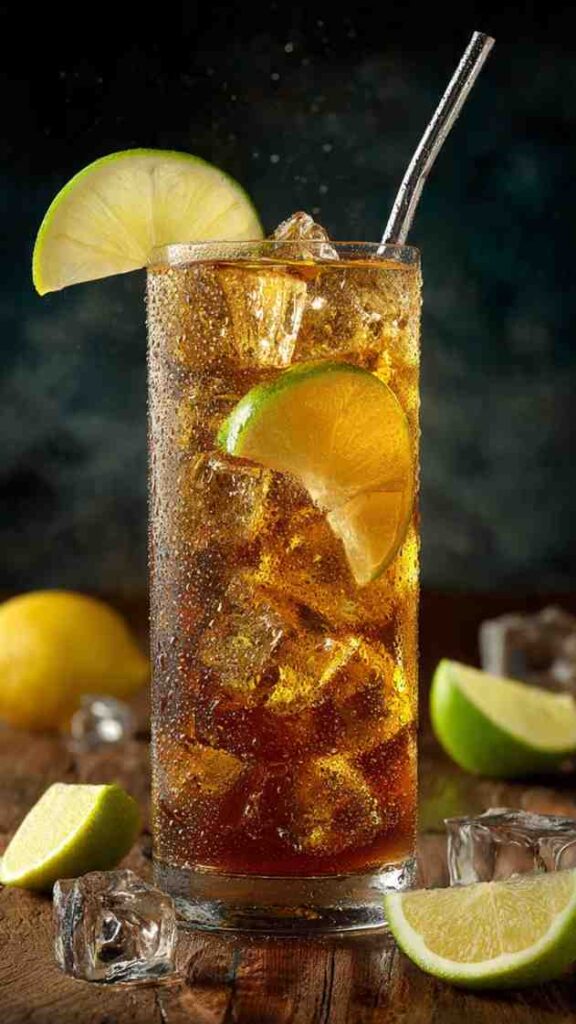
- Top with cola: Add just enough cola to fill the remainder of the glass. The cola will cascade through the clear liquids, creating the iconic iced tea color.
- Garnish: Finish the presentation with a fresh lemon slice perched on the rim.
How should you choose ingredients for a Long Island Iced Tea?
The quality of your ingredients directly dictates the final taste of the cocktail. Because you are blending five different spirits, selecting the right bottles is critical to preventing a clash of flavors.
Selecting the best spirits
- Vodka: Neutrality is key here. Choose a clean, multi-filtered vodka that will not overpower the other liquors.
- Gin: A standard London Dry Gin works best. The juniper notes should be subtle enough to blend with the citrus, rather than dominating the palate.
- Tequila: Always opt for a 100% agave Blanco (silver) tequila. Avoid aged tequilas (Reposado or Añejo) and smoky mezcals, as their strong oak and smoke flavors will severely disrupt the drink’s balance.
- Rum: Stick to a crisp white rum. Dark, spiced, or coconut rums will alter the traditional flavor profile and clash with the gin and tequila.
- Triple Sec: Invest in a high-quality orange liqueur like Cointreau. Cheaper triple secs often contain artificial sweeteners that leave a syrupy aftertaste.
Simple syrup vs. commercial sour mix
The biggest mistake home bartenders make is using commercial sweet and sour mix. Bottled sour mixes are loaded with high-fructose corn syrup and artificial preservatives, resulting in a flat, chemical taste. Choose simple syrup (a 1:1 ratio of dissolved sugar in water) paired with freshly squeezed lemon juice. This combination provides a vibrant, natural acidity that elevates the cocktail.
The exact role of the cola
Cola is not just for color; it serves as a crucial flavoring agent. A splash of Coca-Cola or Pepsi adds complex caramel, vanilla, and spice notes that bind the clear spirits together. Do not overpour the cola. You only need a small splash to achieve the amber hue.
What are the best Long Island Iced Tea variations?
Once you master the classic recipe, the Long Island Iced Tea framework is highly adaptable. By swapping out just one or two ingredients, you can create entirely new flavor profiles.
- Texas Tea: Choose this variation if a robust, oaky flavor matters more than traditional lightness. Simply swap the tequila for an equal measure of bourbon whiskey.
- Blue Long Island (Electric Iced Tea): Substitute the triple sec with Blue Curaçao and replace the cola with a lemon-lime soda (like Sprite). This creates a vibrant, neon-blue cocktail with a sweeter citrus profile.
- True Iced Tea Long Island: Replace the cola with actual chilled black tea. You will need to add a splash of unflavored sparkling water to maintain the cocktail’s signature effervescence.
- Captain Morgan’s Spiced Tea: Incorporate Captain Morgan Original Spiced Rum instead of white rum. The added baking spices blend exceptionally well with the cola top-off.

What are the expert tips for mixing and serving?
Professional bartenders utilize specific techniques to ensure the Long Island Iced Tea is refreshing rather than overwhelming.
Shaking versus stirring
The IBA standard dictates gently stirring the ingredients directly in the serving glass. However, some modern mixologists prefer a quick shake. If you choose to shake, combine the spirits, lemon juice, and simple syrup in a cocktail shaker with ice. Shake vigorously for 10 seconds to chill and properly aerate the mix, then strain over fresh ice. Never shake the cola, as the carbonation will cause the shaker to burst. Top the drink with cola only after pouring.
Glassware and ice selection
Serve this cocktail in a tall Collins glass or a hurricane glass. Because of the high volume of liquid (roughly 5 to 6 ounces before ice), a standard rocks glass will not suffice. Fill the glass to the brim with large, dense ice cubes. Dense ice melts slower, which prevents the cocktail from becoming watered down too quickly.
Nutritional profile
Understanding the nutritional content helps consumers make informed dietary choices. Below is the approximate nutritional breakdown for one standard IBA serving:
| Nutritional Metric | Amount per Serving |
|---|---|
| Calories | ~260 – 280 kcal |
| Carbohydrates | 22g |
| Sugars | 20g |
| Total Fat | 0g |
| Protein | 0g |
Wrapping up your cocktail experience
The Long Island Iced Tea remains a marvel of mixology. It successfully balances a chaotic lineup of five distinct spirits into a cohesive, dangerously smooth beverage. By abandoning cheap sour mixes in favor of fresh lemon juice, high-quality simple syrup, and exact measurements, you can transform this notorious dive-bar drink into a sophisticated craft cocktail.
Gather your ingredients, measure carefully, and enjoy the process of building this classic highball. Always remember to sip slowly and enjoy responsibly, as the refreshing taste cleverly masks a highly potent drink.
Frequently Asked Questions (FAQ)
Can I prepare a Long Island Iced Tea in advance for a party?
Yes, you can batch this cocktail ahead of time. Combine the vodka, gin, tequila, rum, triple sec, simple syrup, and lemon juice in a large pitcher and store it in the refrigerator for up to 48 hours. Pour 3.5 ounces of the pre-mixed batch over ice into individual glasses, then top each glass with a fresh splash of cola just before serving to preserve the carbonation.
How much alcohol by volume (ABV) is in a standard Long Island Iced Tea?
When following the IBA standard recipe (totaling 2.5 ounces of 80-proof spirits and 60-proof triple sec), the final cocktail sits at approximately 16% to 20% ABV, depending on the exact amount of ice dilution and cola used. This makes it roughly equivalent in strength to a strong glass of wine or a stiff Rum and Coke.
What is the best substitute for triple sec in this cocktail?
If you do not have Cointreau or triple sec on hand, you can substitute it with Grand Marnier or an equal measurement of freshly squeezed orange juice. Using orange juice will alter the clarity and texture slightly but still provides the necessary orange botanical notes required to balance the drink.
Why does my homemade Long Island Iced Tea taste too strong?
If the cocktail tastes overwhelmingly alcoholic, it is likely due to overpouring the spirits or under-diluting the drink. Ensure you are measuring exactly 15 ml (0.5 oz) of each liquor using a jigger. Additionally, stirring the drink thoroughly with a glass completely filled with ice ensures proper chilling and dilution, which softens the alcohol bite.
Is there a low-sugar or keto-friendly version of the Long Island Iced Tea?
To reduce the sugar content significantly, replace the simple syrup with a keto-friendly sweetener like liquid stevia or allulose syrup. Furthermore, swap the traditional cola for a zero-sugar diet cola, and use fresh lemon juice rather than any store-bought commercial sour mixes.

The Authentic Long Island Iced Tea Recipe (IBA Standard)
Ingredients
Instructions
-
Prepare the glass
Fill a tall Collins or highball glass completely with fresh ice cubes. -
Combine the spirits
Pour the vodka, blanco tequila, white rum, gin, and Cointreau directly into the ice-filled glass. -
Add the mixers
Pour in the freshly squeezed lemon juice and simple syrup. -
Stir the mixture
Use a long bar spoon to gently stir the ingredients together, ensuring the syrups and spirits blend evenly without excessive dilution. -
Top with cola
Add just enough cola to fill the remainder of the glass. The cola will cascade through the clear liquids, creating the iconic iced tea color. -
Garnish
Finish the presentation with a fresh lemon slice perched on the rim.