
How to Brew Authentic Southern Sweet Tea (Classic Recipe)

The unmistakable sound of ice cubes clinking against a glass pitcher signals relief on a scorching summer afternoon. For generations, Southerners have relied on a cold, sugary glass of brewed tea to cut through the heavy humidity and offer a moment of pure refreshment. Preparing this beloved beverage is a time-honored tradition passed down through families, carrying with it unwritten rules about hospitality, comfort, and culinary pride.
Creating a flawless batch requires more than simply tossing a few tea bags into hot water and dumping in a mountain of sugar. There is a distinct science to achieving a smooth, bitter-free flavor and a crystal-clear appearance. Understanding the chemistry of steeping, the role of specific ingredients, and the exact timing of the sweetening process elevates a standard drink into a true culinary masterpiece.
This comprehensive guide covers everything you need to know to master the classic Southern sweet tea recipe. You will learn the fascinating history behind the beverage, the exact measurements required for perfect balance, and a brilliant baking soda trick that guarantees a perfectly smooth finish every single time.
What is Southern Sweet Tea?
Southern sweet tea is a deeply refreshing, chilled black tea infused with a rich, sugary sweetness and subtle earthy undertones. Often enhanced with a squeeze of fresh lemon, this iconic beverage remains a beloved hospitality staple across the American South for its ability to cut through intense summer heat.
How to Make Southern Sweet Tea
Bring one quart of cold water to a rolling boil, remove it from the heat, and drop in three family-sized black tea bags. Let the tea steep undisturbed for exactly 15 minutes. Remove and discard the tea bags without squeezing them. While the tea is still hot, stir in one cup of granulated sugar and 1/8 teaspoon of baking soda until fully dissolved. Pour the concentrated mixture into a gallon pitcher, add three quarts of cold water, and stir well. Chill thoroughly in the refrigerator before serving over plenty of ice.
How Did Sweet Tea Become a Southern Cultural Staple?
The journey of sweet tea from a rare luxury to an everyday household staple involves shifting trade routes, world fairs, and national prohibition laws.
From Green Tea Punches to Prohibition "Mocktails"
The earliest iced tea recipes looked vastly different from the dark, sweet brews we enjoy today. In the 18th and 19th centuries, wealthy Americans enjoyed green tea punches spiked with heavy amounts of liquor. The very first recorded recipe for sweet iced tea appeared in Lettice Bryan’s 1839 cookbook, The Kentucky Housewife, and Marion Cabell Tyree later popularized a green tea version in her 1879 book, Housekeeping in Old Virginia.
Everything changed during the 1920s. When Prohibition banned the sale of alcohol, Southerners needed a new, complex beverage to serve at social gatherings. Heavily sweetened, ice-cold tea filled that void perfectly, acting as a highly popular "mocktail" for parched partygoers.
The Shift to Black Tea
While early recipes relied on green tea, global events forced a permanent shift in American drinking habits. During World War II, trade disruptions completely cut off the supply of green tea from Asia. Americans quickly pivoted to importing black tea from British-controlled India. Black tea was cheaper, highly accessible, and held up exceptionally well to large amounts of sugar and ice.
Richard Blechynden had already proven the appeal of chilled black tea years earlier at the 1904 World's Fair in St. Louis. Facing a blistering heat wave, he ran his hot brewed tea through chilled lead pipes to offer fairgoers a refreshing cold beverage. The concept took off, and the modern framework for the drink was born.
Which Ingredients Make the Best Authentic Sweet Tea?
Achieving a restaurant-quality brew requires careful selection of your baseline ingredients.
Which Tea Brands Work Best?
Not all tea leaves handle chilling well. Some blends turn cloudy or incredibly bitter when shocked with ice. Southerners fiercely debate which brand reigns supreme, but a few specific names dominate the market:
- Luzianne: Specially formulated for iced tea. The blend is designed to remain crystal clear when cold and offers a smooth, mellow flavor that lacks harsh tannins.
- Lipton: A national classic. Lipton provides a slightly sharper, more robust black tea bite that cuts nicely through heavy amounts of sugar.
- Red Diamond: Highly favored in the deep South for its exceptionally crisp, clean finish.
Understanding Sweetener Options
Traditional recipes call for pure granulated cane sugar. However, modern dietary preferences have opened the door to various alternatives. Keep in mind that substituting the sweetener will alter the final flavor profile.
| Sweetener Type | Flavor Profile | Preparation Notes |
| Cane Sugar | Classic, clean, neutral sweetness. | Must be stirred into hot tea to dissolve fully. |
| Honey | Floral, rich, slightly heavy. | Use 25% less than sugar; alters the tea's color. |
| Allulose | Very similar to sugar, zero calories. | Dissolves easily; requires slightly more volume for equal sweetness. |
| Stevia | Highly concentrated, distinct aftertaste. | Use sparingly (often drops or small packets) to avoid bitterness. |
Why Add Baking Soda to Sweet Tea?
Adding a pinch of baking soda (sodium bicarbonate) is a heavily guarded Southern kitchen secret. Black tea leaves contain tannins, which naturally release a bitter flavor and acidic compounds when steeped. Baking soda acts as an alkaline base, raising the pH of the water and neutralizing those bitter tannins. This simple addition ensures a remarkably smooth taste and completely prevents the tea from turning cloudy when you put it in the refrigerator.
Step-by-Step Guide to Brewing the Perfect Pitcher
Follow these precise instructions to craft a perfectly balanced, refreshing gallon of sweet tea.
Recipe Specifications
| Detail | Measurement |
| Prep Time | 5 minutes |
| Steep Time | 15 minutes |
| Total Time | 20 minutes (plus chilling) |
| Yield | 1 Gallon (16 servings) |
| Calories | ~48 kcal per 8 oz serving |
Ingredients List
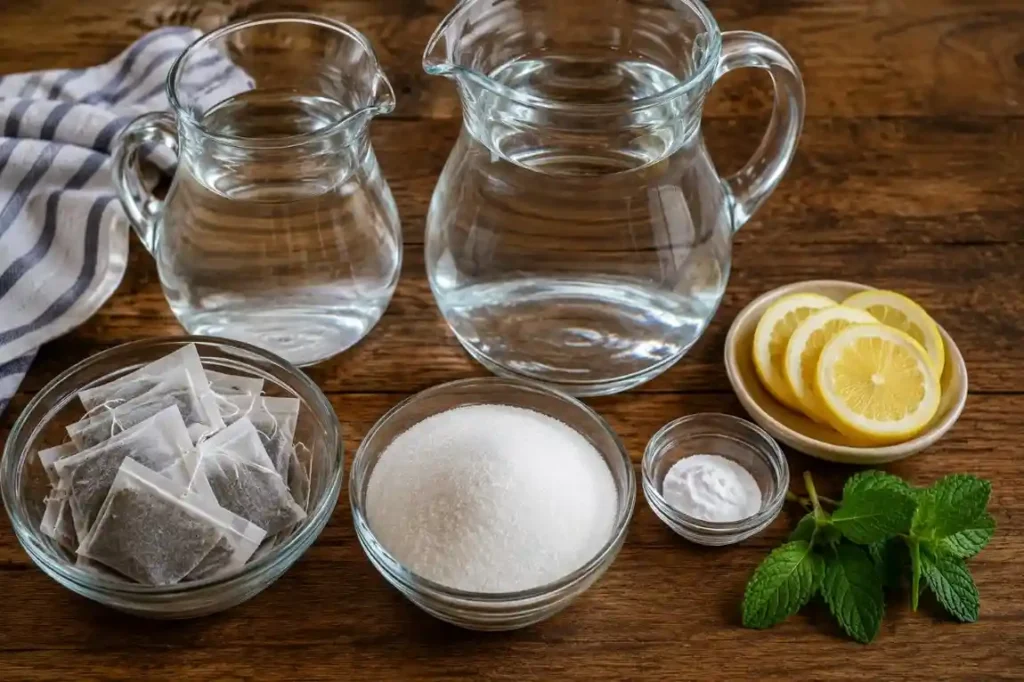
- 1 quart cold water (for boiling)
- 3 quarts cold water (for diluting)
- 3 family-sized black tea bags (or 12 regular tea bags)
- 1 cup granulated cane sugar (adjust to taste)
- 1/8 teaspoon baking soda
- Lemon slices and fresh mint (for garnish)
- Crushed ice
Boil the Water Properly
Always start with fresh, cold tap or filtered water. Pour one quart of cold water into a medium saucepan and bring it to a rolling boil over medium-high heat.
Remove From Heat and Steep
Once the water boils, completely remove the saucepan from the heat source. Drop in your tea bags. Never boil the actual tea bags, as the intense active heat will scorch the delicate leaves and ruin the batch. Cover the pot and let the tea steep for exactly 15 minutes.
Discard Bags Without Squeezing
After 15 minutes, carefully lift the tea bags out of the water using a slotted spoon. Let the excess liquid drip off, but do not squeeze the bags. Pressing the bags forces trapped, highly concentrated tannins into your brew, resulting in a distinctly bitter aftertaste.
Sweeten the Hot Concentrate
Pour the hot, concentrated tea into a heat-safe glass or plastic gallon pitcher. Immediately pour in the granulated sugar and the baking soda. Stir vigorously with a long wooden spoon for about 60 seconds until the sugar granules completely dissolve.
Dilute and Chill
Pour the remaining three quarts of cold water into the pitcher. Stir the mixture thoroughly to combine the concentrate with the fresh water. Place a lid on the pitcher and store it in the refrigerator for at least four hours. Serve only when thoroughly chilled, pouring the tea into tall glasses filled to the brim with ice.
Kitchen Tips and Flavor Variations
Mastering the recipe allows you to tweak the formula to suit your specific cravings or hosting needs.
- Adjusting the Sweetness: If you accidentally make the tea too sweet, squeeze in fresh lemon juice. The citric acid will cut through the heavy sugar and balance the flavor.
- Fruit Infusions: For a refreshing twist, muddle fresh strawberries or ripe peaches in the bottom of your pitcher before adding the hot tea concentrate. Let the fruit steep alongside the mixture before diluting.
- Creating an Arnold Palmer: Fill a glass halfway with your freshly brewed sweet tea, then top the rest off with tart, freshly squeezed lemonade.
- Storage Guidelines: Keep your brewed tea in an airtight pitcher in the refrigerator. It will maintain its peak freshness and flavor for up to 72 hours.

Which Common Mistakes Ruin Sweet Tea?
Even experienced cooks occasionally stumble when preparing large batches of tea. Avoid these frequent errors to maintain a flawless brew.
Stirring Sugar Into Cold Tea
Sugar molecules require heat to break down and bond with water. If you wait until the tea is cool—or try to sweeten individual glasses of unsweetened iced tea at a restaurant—the sugar will simply sink to the bottom of the glass in a gritty pile. Always sweeten your tea while the concentrate is piping hot.
Steeping for Too Long
Leaving tea bags in the water for 30 minutes or more will not yield a "stronger" tea; it will only yield a bitter one. If you prefer a highly robust tea flavor, you must add more tea bags to the water rather than extending the steeping time.
Shocking Hot Tea with Ice
Never pour boiling hot tea directly over a pitcher full of ice to cool it down quickly. The sudden temperature drop shocks the tea, forcing the tannins to separate and instantly turning the entire batch cloudy and murky. Always dilute the hot concentrate with cold water first, then chill it gradually in the fridge.
The Unspoken Rules of Southern Hospitality
Serving sweet tea is a cultural practice rooted in community and comfort. When hosting a summer barbecue or a simple front-porch gathering, the tea should flow freely.
Hosts traditionally provide tall glasses packed tightly with ice. The ice will inevitably melt and dilute the beverage slightly, which is exactly why Southern sweet tea is brewed strong and sweet from the start. A plate of freshly sliced lemon wedges and a small bowl of fresh mint sprigs should always accompany the pitcher, allowing guests to customize their perfect glass.
Frequently Asked Questions (FAQs)
How does the sugar content in sweet tea compare to soda?
A standard 12-ounce serving of home-brewed Southern sweet tea contains roughly 20 grams of sugar, depending on the recipe. In contrast, a 12-ounce can of standard cola packs approximately 39 grams of sugar, making traditional sweet tea a moderately lighter option when consumed in similar quantities.
How much caffeine is in a glass of Southern sweet tea?
Black tea naturally contains caffeine, but the exact amount varies based on steeping time and dilution. An average 8-ounce glass of sweet tea yields between 25 and 50 milligrams of caffeine, which is significantly less than an 8-ounce cup of brewed coffee (which averages 95 milligrams).
How long does brewed sweet tea last before bacteria grows?
Freshly brewed sweet tea should be consumed within 48 to 72 hours. Because the tea contains natural leaf particles and high amounts of sugar, it creates an environment where bacteria and mold can eventually thrive. Always store your tea continuously in the refrigerator to prevent premature spoiling.
Why does adding baking soda prevent cloudy tea?
Cloudiness in chilled tea occurs when naturally occurring tannins and caffeine bind together as the temperature drops. Adding 1/8 teaspoon of baking soda introduces sodium bicarbonate, which neutralizes the tannic acid, balances the pH level, and prevents those compounds from binding, resulting in a visually clear beverage.
Does the steeping temperature affect the final flavor profile?
Yes. Black tea requires water between 200°F and 212°F to properly extract its essential oils and flavors. However, actively boiling the water while the tea bags are inside will scorch the leaves and destroy the delicate flavor profile, which is why you must remove the pot from the heat source before steeping.
Raising a Glass to Southern Hospitality
Brewing the perfect pitcher of sweet tea connects you to a rich history of culinary resourcefulness and community gathering. By selecting the right black tea, utilizing the baking soda trick, and adhering to strict steeping times, you guarantee a refreshing, bitter-free beverage that commands respect at any dinner table. Grab your favorite glass pitcher, boil some fresh water, and enjoy the simple, sweet comforts of a true Southern classic.
- 1 quart cold water (for boiling)
- 3 quarts cold water (for diluting)
- 3 family-sized black tea bags (or 12 regular tea bags)
- 1 cup granulated cane sugar (adjust to taste)
- 1/8 teaspoon baking soda
- Lemon slices and fresh mint (for garnish)
- Crushed ice
- 1 Boil the Water ProperlyAlways start with fresh, cold tap or filtered water. Pour one quart of cold water into a medium saucepan and bring it to a rolling boil over medium-high heat.
- 2
Remove From Heat and SteepOnce the water boils, completely remove the saucepan from the heat source. Drop in your tea bags. Never boil the actual tea bags, as the intense active heat will scorch the delicate leaves and ruin the batch. Cover the pot and let the tea steep for exactly 15 minutes.- 3
Discard Bags Without SqueezingAfter 15 minutes, carefully lift the tea bags out of the water using a slotted spoon. Let the excess liquid drip off, but do not squeeze the bags. Pressing the bags forces trapped, highly concentrated tannins into your brew, resulting in a distinctly bitter aftertaste.- 4
Sweeten the Hot ConcentratePour the hot, concentrated tea into a heat-safe glass or plastic gallon pitcher. Immediately pour in the granulated sugar and the baking soda. Stir vigorously with a long wooden spoon for about 60 seconds until the sugar granules completely dissolve.- 5
Dilute and ChillPour the remaining three quarts of cold water into the pitcher. Stir the mixture thoroughly to combine the concentrate with the fresh water. Place a lid on the pitcher and store it in the refrigerator for at least four hours. Serve only when thoroughly chilled, pouring the tea into tall glasses filled to the brim with ice - 2