Essiac tea is a traditional herbal drink blending burdock root, sheep sorrel, slippery elm, and Indian rhubarb. Known for its earthy, slightly bitter flavor profile, this wellness tea remains popular for its purported detoxifying and antioxidant properties. Preparing it correctly ensures you extract the maximum benefit from these powerful herbs.
How Do You Make Essiac Tea?
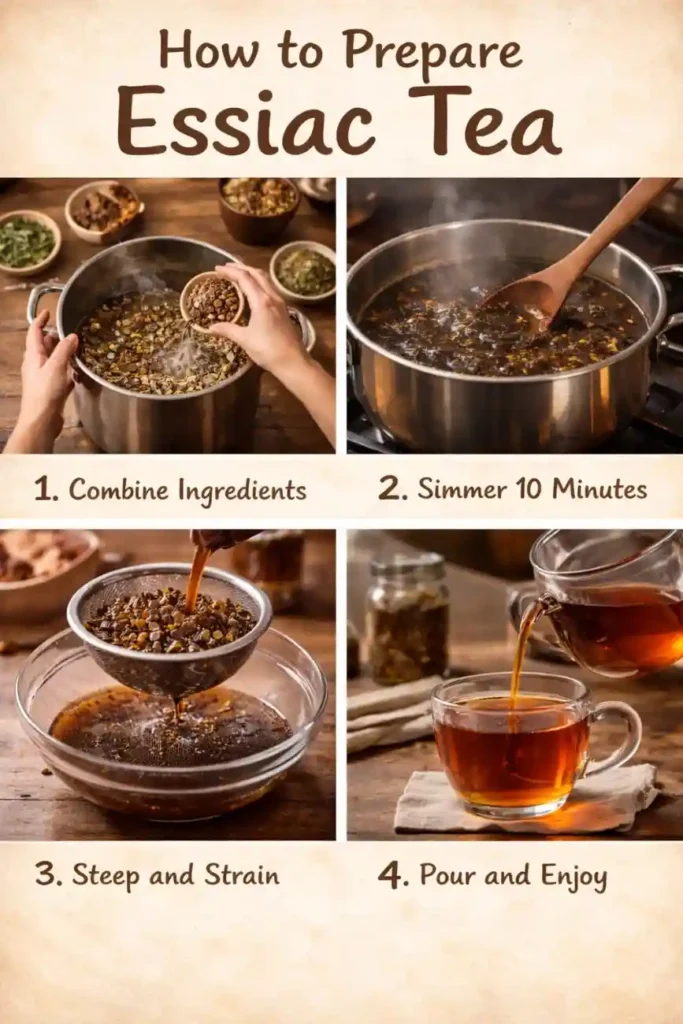
To make a standard batch of Essiac tea, bring 1 gallon of distilled water to a rolling boil in a stainless steel pot. Stir in 4 ounces (113 grams) of the dry Essiac herb mixture. Cover and simmer for exactly 10 minutes. Turn off the heat and let the mixture steep for 12 hours. Afterward, reheat the tea until it steams, strain it through a fine-mesh sieve into sterile amber glass bottles, and store it in the refrigerator for up to three weeks.
Brewing herbal teas at home can sometimes feel overwhelming, but mastering the Essiac tea recipe is remarkably straightforward once you understand the fundamentals. This unique blend has captivated natural health enthusiasts for decades, generating widespread interest due to its unique combination of roots and bark. People from all over the world seek out this specific formulation to support their daily wellness routines.
Proper preparation is the secret to unlocking the potential of these herbs. Many commercial teas use shortcuts or substandard ingredients, which diminishes the quality of the final brew. By sourcing your own organic herbs and following the precise steeping process, you can create an authentic, potent beverage right in your own kitchen.
This guide covers everything you need to know about preparing this herbal blend. You will learn the exact ratios for small and large batches, the science behind the ingredients, and the best practices for storing your homemade tea.
What Are the Key Ingredients in Essiac Tea?
The traditional Essiac tea formula relies on a precise ratio of four distinct herbs. Each ingredient contributes a specific property to the final brew, working synergistically to create the tea’s unique profile.
- Burdock Root (Arctium lappa): This earthy root makes up the bulk of the recipe. Practitioners value burdock root for its high antioxidant content and its historical use in supporting natural detoxification pathways.
- Sheep Sorrel (Rumex acetosella): Providing a tart, slightly astringent flavor, sheep sorrel is an essential component. Some studies highlight its antiviral properties, and it is a rich source of vitamins and minerals.
- Slippery Elm Bark (Ulmus rubra): When mixed with water, the inner bark of the slippery elm tree creates a soothing gel called mucilage. This helps coat the digestive tract and provides a smooth texture to the tea.
- Turkish/Indian Rhubarb Root (Rheum palmatum/officinale): Used sparingly due to its potency, this root acts as a gentle laxative and digestive aid. It contains compounds that help cleanse the liver and intestines.
Ingredient Ratio Table
To understand the balance of the formula, look at the traditional proportional breakdown:
| Herb | Parts by Weight | Percentage of Blend |
| Burdock Root (cut) | 24 parts | ~53% |
| Sheep Sorrel (powdered) | 16 parts | ~35% |
| Slippery Elm Bark (powdered) | 4 parts | ~9% |
| Turkish Rhubarb Root (powdered) | 1 part | ~3% |
How Do You Prepare Your Own Essiac Tea?
Creating the perfect batch requires attention to detail, specifically regarding your equipment and water quality.
Sourcing High-Quality Ingredients
Selecting the right herbs directly impacts the potency of your tea. Always opt for certified organic herbs to avoid pesticide residue.
- Powdered vs. Cut and Sifted: Powdered herbs allow for maximum extraction of the beneficial compounds, especially the mucilage from slippery elm. However, powders can be difficult to strain. Cut and sifted herbs are much easier to filter out, though they may require a slightly longer steeping time to release their full benefits.
Essential Equipment
Using the correct tools prevents chemical reactions that can ruin the tea.
- Stainless Steel or Glass Pots: Never use aluminum or copper pots, as the herbs can react with these metals.
- Fine Mesh Strainer: A high-quality metal strainer or unbleached cheesecloth helps remove the fine herbal particles.
- Amber Glass Bottles: Dark glass protects the finished tea from light degradation.
Recipe Summary
| Prep Time | Cook Time | Steep Time | Total Time | Yield |
| 5 mins | 20 mins | 12 hours | 12 hours 25 mins | 1 Gallon (32 servings) |
Recipe for a Large Batch (1 Gallon)
This is the standard recipe size, providing enough tea for a few weeks of daily consumption.
Ingredients List:
- 134 oz of distilled or spring water (1 gallon plus 6 oz to account for evaporation)
- 4 oz (113 grams) of dry Essiac herbal mixture
Detailed Preparation Steps:
- Boil the water: Pour the distilled water into a large stainless steel pot and bring it to a rolling boil.
- Add the herbs: Stir in the 4 oz of dry Essiac mixture.
- Simmer: Reduce the heat, cover the pot, and simmer gently for exactly 10 minutes.
- Steep: Remove the pot from the heat. Keep it covered and let it sit at room temperature for 12 hours.
- Reheat: After 12 hours, stir the tea and heat it until it just begins to steam (do not boil). This step sterilizes the liquid.
- Strain and Bottle: Remove from heat and strain the tea through a fine-mesh sieve into sterilized amber glass bottles.
- Cool and Store: Cap the bottles tightly, let them cool to room temperature, and immediately place them in the refrigerator.
Recipe for a Small Batch (1 Quart)
If you prefer to make a smaller amount to test the flavor or ensure maximum freshness, use this modified recipe.
Ingredients List:
- 34 oz of distilled or spring water
- 1 oz (28 grams) of dry Essiac herbal mixture
Detailed Preparation Steps:
- Bring the 34 oz of water to a boil in a glass or stainless steel pot.
- Stir in the 1 oz of herbal blend.
- Cover and simmer on low heat for 10 minutes.
- Remove from heat and let steep covered for 12 hours.
- Reheat the mixture until steaming hot.
- Strain the liquid into a sterilized 1-quart amber glass jar.
- Seal, cool, and refrigerate immediately.
Important Considerations During Preparation
Avoiding common mistakes will drastically improve your brewing success.
- Water Quality: Always use distilled or pure spring water. Tap water contains chlorine and fluoride, which can interact negatively with the herbs.
- Steeping Temperatures: Do not boil the tea for longer than 10 minutes. Over-boiling destroys delicate enzymes and volatile oils within the herbs.
- Dairy-Free and Vegan: This recipe is naturally 100% vegan and dairy-free. Avoid adding milk or cream, as dairy proteins can bind to the antioxidants and reduce their absorption.
How Should You Store and Consume Essiac Tea?
Proper storage is critical because homemade Essiac tea contains no artificial preservatives.
Storage Guidelines
Always store your prepared tea in the refrigerator. When kept cold in sterilized, airtight glass bottles, the liquid will remain fresh for two to three weeks. Do not freeze the liquid, as extreme cold breaks down the plant compounds and alters the tea’s consistency.
Signs of spoilage include a sour smell, visible floating mold, or a slimy texture. If you notice any of these, discard the batch immediately.
Recommended Dosage and Frequency
For general wellness, health practitioners typically suggest drinking 2 ounces of the concentrated tea mixed with 2 ounces of hot water. Drink this mixture once daily. For optimal absorption, consume the tea on an empty stomach—ideally 30 minutes before eating or two hours after a meal.
If you find the taste too bitter, you can add a small drop of stevia or maple syrup, though traditionalists recommend drinking it plain.
What Are the Potential Benefits of Essiac Tea?
While the history of Essiac tea is filled with bold claims, modern science offers a more measured view of its properties.
Antioxidant and Anti-inflammatory Properties
The individual herbs in the blend contain robust levels of antioxidants. A 2006 test-tube study published in the Journal of Ethnopharmacology found that Essiac tea possessed potent antioxidant and DNA-protective activity. By scavenging free radicals, the tea may help reduce systemic inflammation.
Claims of Immune Stimulation and Detoxification
Many users drink this herbal blend to support liver function and boost immunity. Burdock root acts as a mild diuretic and diaphoretic, promoting the flushing of waste from the body. Slippery elm supports gut health, which is closely linked to overall immune system function.
Conflicting Research on Anticancer Effects
The most famous claims surrounding Essiac tea relate to cancer treatment, dating back to Rene Caisse in the 1920s. However, scientific evidence remains highly conflicting. While some older laboratory studies suggested high concentrations of the tea could inhibit certain cell growth, comprehensive reviews by organizations like Cancer Research UK note a lack of reliable human clinical trials. Some test-tube studies even indicated the tea might stimulate breast cancer cells, highlighting the need for rigorous, peer-reviewed human research.
What Are the Potential Side Effects and Warnings?
Herbal remedies are potent, and Essiac tea is no exception. It is vital to understand how these plants interact with the human body.
Common Side Effects
Some individuals experience mild adverse reactions when first introducing the tea to their diet. These can include nausea, mild stomach cramping, increased bowel movements, and frequent urination. These symptoms are often attributed to the detoxifying nature of rhubarb and burdock.
Specific Warnings
- Pregnant and Breastfeeding Women: Do not consume this tea. The herbs can stimulate uterine contractions and pass through breast milk.
- Kidney Stones: Sheep sorrel contains high levels of oxalates, which can exacerbate kidney stone formation in susceptible individuals.
- Diarrhea and Loose Stools: Turkish rhubarb root contains anthraquinones, which act as a stimulant laxative. If you develop severe abdominal pain or diarrhea, discontinue use immediately.
Always consult a qualified healthcare professional before adding potent herbal supplements to your routine, especially if you take prescription medications.
Frequently asked questions
How long does a prepared batch of Essiac tea actually last?
When stored properly in sterilized glass bottles in a refrigerator, a prepared batch of Essiac tea lasts between 14 and 21 days. After 3 weeks, the risk of bacterial growth and spoilage increases significantly.
What is the exact ratio of burdock root to rhubarb root in the traditional blend?
The traditional recipe uses a precise 24-to-1 ratio by weight. This means for every 24 ounces of burdock root, you use exactly 1 ounce of Turkish rhubarb root, ensuring the laxative effect of the rhubarb does not overpower the brew.
How much prepared tea should I drink daily for general maintenance?
The standard preventative maintenance dosage is 2 fluid ounces (approx. 60 ml) of the concentrated tea diluted in 2 fluid ounces of hot water, taken once daily on an empty stomach.
Are the antioxidant levels in Essiac tea scientifically proven?
Yes. A 2006 in-vitro study demonstrated that Essiac tea effectively scavenges hydroxyl and superoxide radicals, showing measurable DNA-protective activity that some researchers note is comparable to or higher than green tea extracts in laboratory settings.
Why is the steeping process exactly 12 hours?
A 12-hour steeping period is required to fully extract the complex polysaccharides (mucilage) from the slippery elm bark and the dense phytochemicals from the tough burdock roots, which a standard 5-minute tea steep cannot achieve.
Start Brewing Your Own Herbal Blends
Making your own Essiac tea allows you to control the quality of your ingredients and connect with a decades-old herbal tradition. By following the strict preparation guidelines, utilizing stainless steel equipment, and adhering to precise measurements, you can create a potent, soothing beverage.
Remember that while natural remedies offer excellent support for a healthy lifestyle, they are not substitutes for professional medical care. Discuss any new herbal regimen with your doctor to ensure it aligns safely with your specific health needs. Gather your herbs, prepare your pots, and take the first step toward mastering this classic botanical brew.

How to Make Essiac Tea: The Original 4-Herb Healing Recipe”
Ingredients
Instructions
-
Boil the water
Pour the distilled water into a large stainless steel pot and bring it to a rolling boil. -
Add the herbs
Stir in the 4 oz of dry Essiac mixture. -
Simmer
Reduce the heat, cover the pot, and simmer gently for exactly 10 minutes. -
Steep
Remove the pot from the heat. Keep it covered and let it sit at room temperature for 12 hours.
-
Reheat
After 12 hours, stir the tea and heat it until it just begins to steam (do not boil). This step sterilizes the liquid. -
Strain and Bottle
Remove from heat and strain the tea through a fine-mesh sieve into sterilized amber glass bottles. -
Cool and Store
Cap the bottles tightly, let them cool to room temperature, and immediately place them in the refrigerator.