The Manhattan is a sophisticated, spirit-forward classic cocktail combining spicy rye whiskey, rich sweet vermouth, and aromatic bitters. Revered for its perfectly balanced sweet, bitter, and warm flavor profile, this timeless three-ingredient drink remains a beloved staple for both professional bartenders and home mixologists alike.
How do you make a Manhattan cocktail quickly?
If you want to mix this classic drink right now, follow these simple steps:
- Add 2 ounces of rye whiskey, 1 ounce of sweet vermouth, and 2 dashes of Angostura bitters to a mixing glass filled with ice.
- Stir the mixture continuously for 20 to 30 seconds until thoroughly chilled.
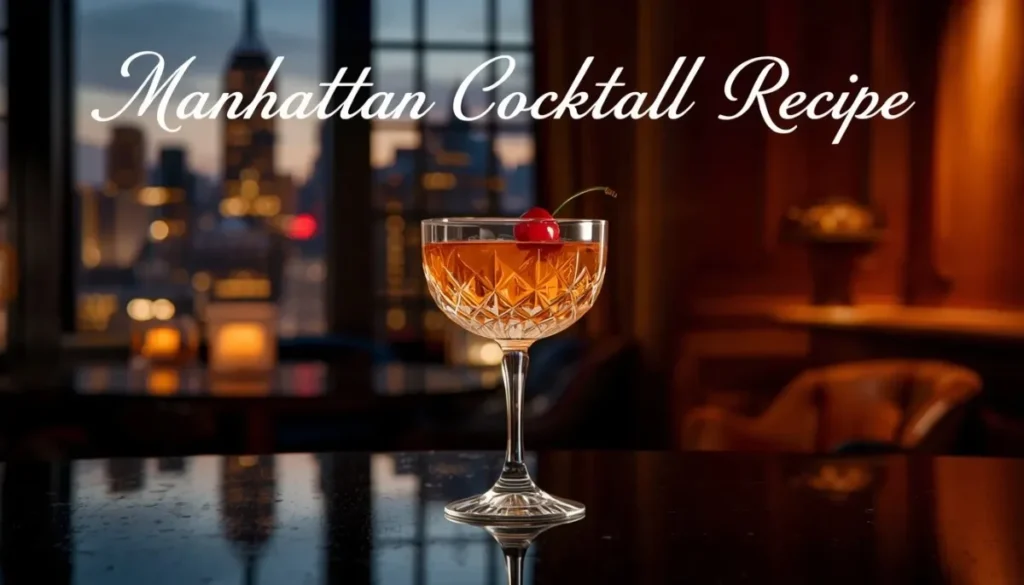
- Strain the liquid into a chilled coupe or martini glass.
- Garnish with a premium maraschino cherry.
For home bartenders looking to master the nuances of this iconic drink, the details matter. Achieving the perfect balance requires an understanding of ingredients, temperatures, and techniques.
Where did the Manhattan cocktail originate?
Tracing the exact roots of 19th-century mixed drinks often leads to a web of conflicting folklore. The most prominent legend claims the drink was invented in the mid-1870s at the Manhattan Club in New York City. The story suggests it was crafted for a banquet hosted by Lady Randolph Churchill, the mother of Winston Churchill.
Cocktail historians, however, have largely debunked this myth. Historical records prove that Lady Randolph Churchill was pregnant and living in England at the time of the infamous banquet.
A more accurate timeline points to the 1860s or 1870s in New York City. A popular alternate theory credits a bartender named Black, who operated a bar on Broadway near Houston Street. Regardless of the exact creator, the drink gained immense popularity in the late 1800s. It provided a complex, aromatic upgrade to the standard “Whiskey Cocktail” (which we now know as the Old Fashioned) by swapping plain sugar for fortified, botanical wine.
What is the classic 2:1 cocktail template?
The foundation of a perfect Manhattan relies on a golden ratio: two parts strong to one part sweet. This simple mathematical approach creates a structural balance that has survived over a century of bartending trends.
- 2 Parts Base Spirit: Provides the alcoholic backbone and primary flavor profile.
- 1 Part Fortified Wine: Softens the alcoholic heat and introduces dark fruit and herbal notes.
- Aromatic Bitters: Acts as the seasoning, binding the whiskey and wine together while adding depth.
To understand why this ratio works so well, look at the sugar content. An average sweet vermouth contains roughly 4.5 grams of sugar per fluid ounce. This equals about one teaspoon of sugar—the exact amount traditionally muddled into an Old Fashioned. You are essentially using the same spirit-to-sugar ratio, but gaining the vast herbal complexity of the vermouth.
Should you choose Rye or Bourbon?
Selecting your base spirit drastically alters the final drink. While modern drinkers often debate the merits of both, traditionalists strongly favor rye.
Why choose Rye Whiskey?
Rye was the dominant grain grown in the northeastern United States during the 1800s, making it the most historically accurate choice. It carries a distinctly dry, peppery, and spicy profile. Because sweet vermouth brings considerable richness to the glass, rye acts as a necessary counterweight. The spice cuts through the syrupy wine, keeping the cocktail crisp.
- Top choices: Rittenhouse Rye (100 proof holds up well to dilution), Bulleit Rye, or Knob Creek Rye.
Why choose Bourbon?
Bourbon must be distilled from at least 51% corn, resulting in a naturally sweeter, fuller-bodied whiskey with heavy notes of vanilla, caramel, and oak. Using bourbon yields a softer, more mellow beverage. To prevent a bourbon-based variation from becoming overly cloying, bartenders often recommend adding an extra dash of bitters.
- Top choices: Maker’s Mark, Woodford Reserve, or Elijah Craig.
Why is sweet vermouth so critical?
Vermouth is often the most neglected ingredient in home bars, yet it makes up a full third of this recipe. Sweet vermouth is a fortified wine infused with a proprietary blend of botanicals, roots, barks, and spices. It is not clear; it pours a deep, dark red or brown.
The brand you choose will dictate the personality of your drink:
- Carpano Antica Formula: Bold, rich, and heavily accented with vanilla and cocoa. It creates a highly decadent, robust drink.
- Cocchi Vermouth di Torino: Perfectly balanced with notes of dried fruit and warm spices, pairing beautifully with high-proof ryes.
- Dolin Rouge: Lighter, smoother, and more herbaceous. It allows the whiskey to take center stage without overpowering the palate.
How should you store sweet vermouth?
A common mistake home bartenders make is storing vermouth on a bar cart. Because vermouth is wine-based, it oxidizes and spoils. An opened bottle must be kept in the refrigerator, where it will maintain its peak flavor for four to eight weeks. If your vermouth tastes flat or excessively sour, it is time for a fresh bottle.
Why must you stir instead of shake?
James Bond popularized the shaken martini, but shaking a spirit-forward cocktail like this is a fundamental flaw.
Shaking introduces violent aeration, trapping tiny air bubbles in the liquid. This results in a cloudy, frothy texture that ruins the desired silky, crystalline aesthetic. Furthermore, shaking chips the ice, leading to rapid, unpredictable over-dilution.
Stirring gently chills the ingredients while controlling the precise amount of water introduced into the mix. You want the ice to melt just enough to take the harsh burn off the alcohol, merging the whiskey and vermouth into a seamless, velvety liquid.
What are the essential garnishes?
The finishing touch provides an aromatic cue before you even take a sip.
- Brandied or Maraschino Cherries: Forget the neon-red, artificially dyed cherries found in ice cream parlors. A premium cherry, like a Luxardo maraschino, offers a dense, dark, slightly tart bite covered in a rich syrup. Dropping one into the glass provides a sweet treat at the finish.
- Lemon Twist: Expressing the oils of a fresh lemon peel over the surface of the drink introduces a bright, acidic aroma. This is an excellent choice if you prefer a drier, highly aromatic presentation.
What are the best modern riffs and variations?
The 2:1 template is highly adaptable, leading to a famous family of cocktails named after New York City boroughs and neighborhoods.
- The Brooklyn: Swaps sweet vermouth for dry vermouth, adding quarter-ounces of maraschino liqueur and Amer Picon (a French orange-forward aperitif). It is lighter, drier, and deeply complex.
- The Red Hook: A popular modern classic utilizing rye whiskey, Punt e Mes (a highly bitter Italian vermouth), and maraschino liqueur.
- The Greenpoint: Combines rye whiskey, sweet vermouth, and Yellow Chartreuse for an intensely herbal, honeyed twist.
- The Black Manhattan: Replaces the sweet vermouth entirely with Averna, an Italian amaro, yielding a dark, bittersweet, and herbaceous nightcap.
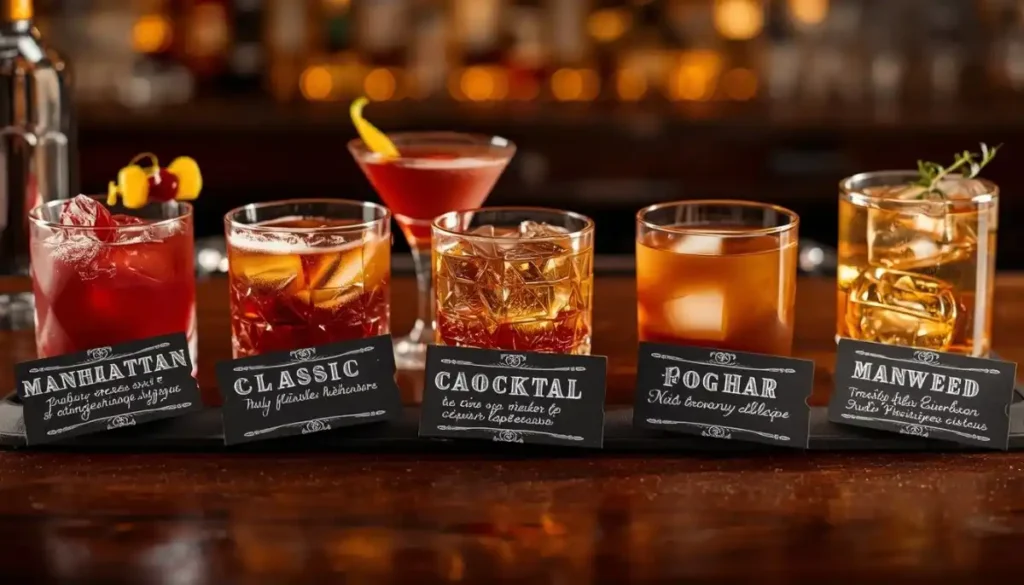
Step-by-Step Masterclass: Mixing the perfect Manhattan
Ready to elevate your home bartending skills? Follow this structured guide to assemble the ultimate classic.
Cocktail Specifications
| Prep Time | Yield | Estimated Calories | Estimated ABV |
|---|---|---|---|
| 3 Minutes | 1 Drink | 188 – 192 kcal | ~28% – 30% |
Ingredients
- 2 oz Straight Rye Whiskey (preferably 90-100 proof)
- 1 oz Premium Sweet Vermouth (e.g., Cocchi di Torino or Carpano Antica)
- 2 dashes Angostura Aromatic Bitters
- 1 Premium Cocktail Cherry (e.g., Luxardo)
- High-quality, dense ice cubes
Essential Equipment
- Glass mixing beaker
- Long-handled bar spoon
- Jigger for precise measuring
- Hawthorne strainer or Julep strainer
- Chilled coupe, Nick & Nora, or martini glass
Preparation Steps
- Pre-chill your glassware: Place your serving glass in the freezer for at least 10 minutes prior to mixing. A cold glass ensures the drink stays crisp longer.
- Measure the ingredients: Using your jigger, pour the rye whiskey and sweet vermouth into your mixing beaker. Add exactly two sharp dashes of Angostura bitters.
- Add ice: Fill the mixing beaker roughly three-quarters full with dense, solid ice cubes. Avoid using crushed ice, which will melt too quickly.
- Stir smoothly: Insert your bar spoon, keeping the back of the spoon against the glass wall. Stir in a fluid, circular motion for 20 to 30 seconds. The outside of the glass should become frosty.
- Strain and serve: Place your strainer over the mixing glass and pour the chilled liquid into your frozen coupe glass.
- Garnish: Carefully drop a single cherry into the center of the glass.
How can you adapt this recipe for different dietary needs?
While this classic beverage is naturally free of many common allergens, achieving complete semantic coverage requires looking at specific ingredient formulations.
- Vegan/Dairy-Free Options: The base spirits are vegan. However, some lower-tier cherries use carmine (derived from insects) for red dye, and some vermouths utilize animal-based fining agents during wine production. To ensure a strictly vegan drink, verify your vermouth brand (Dolin is widely considered vegan-friendly) and use naturally dark brandied cherries.
- Healthier Variations: Because the sugar comes inherently from the vermouth, creating a “low-sugar” version requires altering the ratio. Try a “Perfect Manhattan,” which splits the vermouth requirement into 0.5 oz sweet vermouth and 0.5 oz dry vermouth, significantly cutting the overall sugar content while retaining the herbal profile.
- Zero-Proof Alternatives: Non-alcoholic spirits have improved dramatically. You can craft a zero-ABV version by combining a roasted, spiced non-alcoholic whiskey alternative with a non-alcoholic botanical aperitif in a 2:1 ratio, utilizing alcohol-free bitters.
What are common preparation mistakes?
- Eyeballing measurements: The balance between the harsh whiskey and the sweet wine is fragile. Always use a jigger.
- Using stale vermouth: If your bottle has been sitting on a shelf at room temperature for six months, it has turned to vinegar. Your drink will taste sour and flat.
- Under-diluting: The stirring process is not just to make the drink cold; it adds necessary water. If the cocktail tastes overwhelmingly hot and astringent, you need to stir it longer.
Why does this classic remain a staple?
The Manhattan has survived Prohibition, the dark ages of sour-mix bartending in the 1980s, and the modern craft cocktail revival. It demands respect because it relies entirely on the quality of its components rather than flashy tricks or elaborate syrups. When you pour a well-crafted iteration, you are participating in a 150-year-old tradition. It remains the ultimate benchmark for a home bartender’s skill and a sophisticated staple for anyone who appreciates fine spirits.
Frequently Asked Questions
How many calories are in a standard Manhattan?
A classic 2:1 recipe using 80-proof whiskey and standard sweet vermouth contains approximately 188 to 192 calories. The majority of these calories come from the alcohol itself, with the residual sugars in the vermouth contributing the rest.
How long does sweet vermouth actually last?
Once uncorked and exposed to oxygen, sweet vermouth begins to degrade. Kept at room temperature, it spoils in a matter of days. If tightly sealed and stored in a refrigerator, it will retain optimal flavor for 4 to 8 weeks before the herbal notes begin to flatten.
What is the exact sugar content of this cocktail?
Unlike drinks made with simple syrup, the sweetness here is derived entirely from the wine. A typical sweet vermouth contains roughly 150 grams of sugar per 750ml bottle. Therefore, a standard 1-ounce pour contributes about 4.5 to 5 grams of sugar to the finished drink.
How strong is this drink by volume (ABV)?
This is a highly potent, spirit-forward beverage. Assuming a 90-proof (45% ABV) whiskey, a 16% ABV vermouth, and a standard dilution rate of 20% water weight from ice melt, the final cocktail sits at approximately 28% to 30% ABV.
Can you batch this recipe for a party?
Yes, this cocktail batches exceptionally well because it contains no perishable citrus juices. To make a 10-serving batch, combine 20 oz of rye, 10 oz of sweet vermouth, and 20 dashes of bitters. Crucially, you must add 6 to 7 ounces of filtered water to replicate the dilution you would normally get from stirring with ice. Store the batch in the freezer and pour directly into chilled glasses.
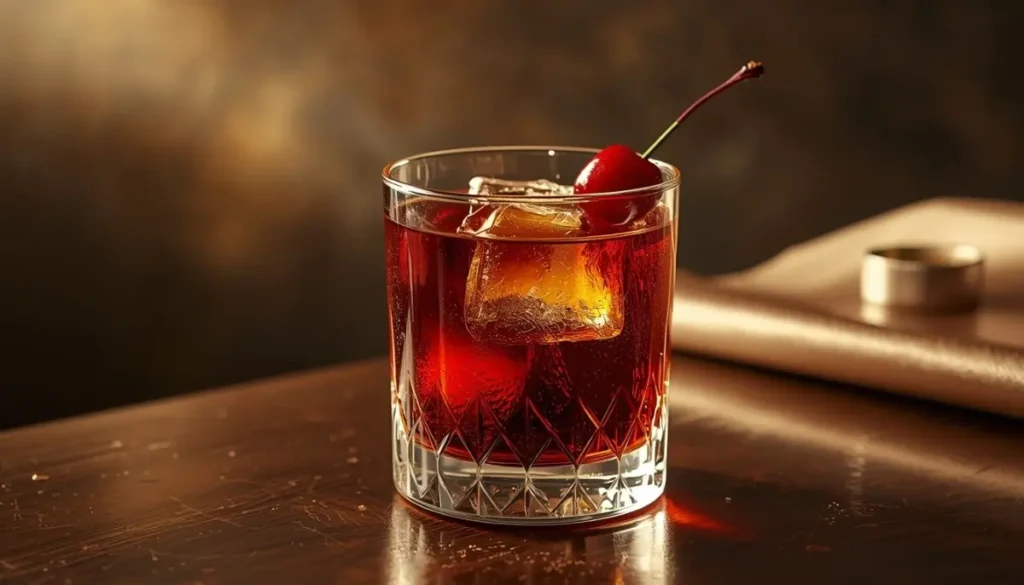

The Best Manhattan Cocktail Recipe (Perfect Every Time)
Ingredients
Instructions
-
Pre-chill your glassware
Place your serving glass in the freezer for at least 10 minutes prior to mixing. A cold glass ensures the drink stays crisp longer. -
Measure the ingredients
Using your jigger, pour the rye whiskey and sweet vermouth into your mixing beaker. Add exactly two sharp dashes of Angostura bitters. -
Add ice
Fill the mixing beaker roughly three-quarters full with dense, solid ice cubes. Avoid using crushed ice, which will melt too quickly. -
Stir smoothly
Insert your bar spoon, keeping the back of the spoon against the glass wall. Stir in a fluid, circular motion for 20 to 30 seconds. The outside of the glass should become frosty. -
Strain and serve
Place your strainer over the mixing glass and pour the chilled liquid into your frozen coupe glass. -
Garnish
Carefully drop a single cherry into the center of the glass.